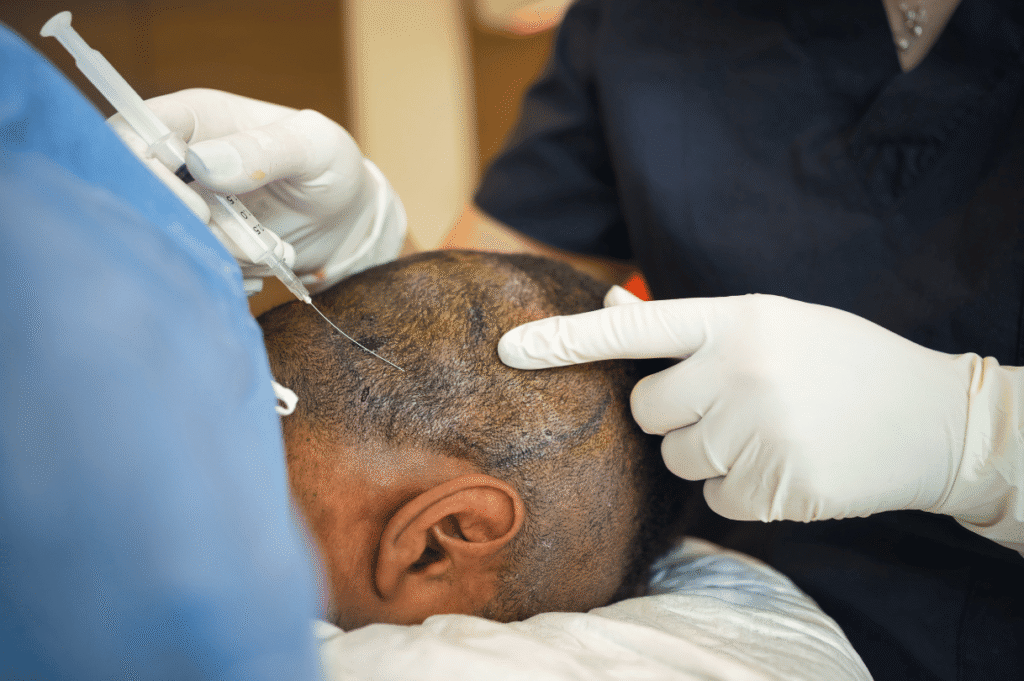
Which Type of Hair Transplant is Best for You?
Hair transplant has become a popular solution for those struggling with hair loss and balding.
Not sure if this treatment is right for you? Ask Dr. Zain Latif’s team.
But with so many options, it can be overwhelming to determine which type is best for you. In this article, we will provide you with a solid understanding to select the appropriate technique.
Pros and Cons of Hair Transplant. Read More?
Understanding Hair Transplant
A hair transplant is a surgical technique. It replenishes your thinning locks or bald spots using your own hair.
The process involves harvesting hair follicles from a part of your body. Usually, the back of your head where hair is more plentiful and then carefully embedding them into the areas experiencing hair loss.
Doctors favor this method because it is minimally invasive. It makes the procedure relatively comfortable for patients.
It’s performed under local anesthesia. You’ll be awake, but the affected areas will be completely numb. This minimizes any discomfort.
While it is a surgical procedure, don’t let that term alarm you. The procedure does not require large, daunting cuts. Over time, experts have refined hair transplant techniques. They have become more sophisticated and precise. As a result, recovery is quicker than you might think.
The success of this procedure doesn’t only rely on the surgery itself. It also depends on the careful and skilled preparation of the hair follicles and their subsequent placement into the scalp. This detailed work ensures the transplanted hair will grow naturally in its new location, giving you a fuller, healthier head of hair.


Types of Hair Transplants:
When delving into hair transplants, you will primarily encounter two key methods:
- Follicular Unit Transplantation (FUT)
- Follicular Unit Extraction (FUE)
The FUT method, also known as the “strip method,” involves removing a small strip of tissue from the back of your head. This is where your hair tends to be denser and less prone to thinning. From this strip, individual hair follicles are carefully extracted under a microscope. Then your doctor implants them into the thinning or bald areas of your scalp. The FUT method is a tried and tested technique. It can yield a significant number of grafts in a single session. This makes it ideal for larger areas of hair loss.
On the other hand, the FUE method doesn’t involve removing a strip of tissue. Instead, individual hair follicles are directly extracted from the back of your head using a specialized punching tool. This leaves only small, circular scars. They are typically less noticeable than the linear scar left by FUT. The extracted follicles are then transplanted to the areas of hair loss.
FUE generally requires multiple sessions to achieve the desired coverage. However, it is less invasive and has a faster recovery time.
Remember, both methods use your own hair. This ensures the transplanted hair will grow naturally in its new location. Therefore, the choice between FUT and FUE comes down to your personal preferences, your hair loss pattern, and your consultation with the transplant surgeon.

Which Transplant is Best for You?
Determining the optimal hair transplant procedure for you is a personal process. It depends on your unique situation.
For instance, you should consider the severity and pattern of your hair loss.
If you’re dealing with extensive baldness or thinning, the Follicular Unit Transplantation (FUT) method may be suitable. It allows a substantial number of grafts in a single session.
However, if you prefer a less invasive procedure and a faster recovery period, then the Follicular Unit Extraction (FUE) might be the better option.
Your lifestyle also plays a role in this decision.
Do you have the flexibility to accommodate multiple sessions for an FUE transplant, or would you prefer to have fewer, more intensive sessions with the FUT method?
Additionally, you should take into account your comfort level with post-operative scars.
The FUE method typically leaves smaller, less noticeable scars than FUT.
Ultimately, it’s essential to consult with a hair transplant specialist. They can assess your hair loss pattern, discuss your expectations, and recommend the most appropriate procedure based on your individual needs.
Remember, there’s no one-size-fits-all solution when it comes to hair transplants. Your journey to restore your hair is personal. You should make the choice between FUT and FUE with your doctor. Consider your comfort, convenience, and expectations.
Ready to talk to a doctor about it?
Book on WhatsApp