HIFU (High-Intensity Focused Ultrasound) Treatments
Full Face | HIFU
Half Face | HIFU
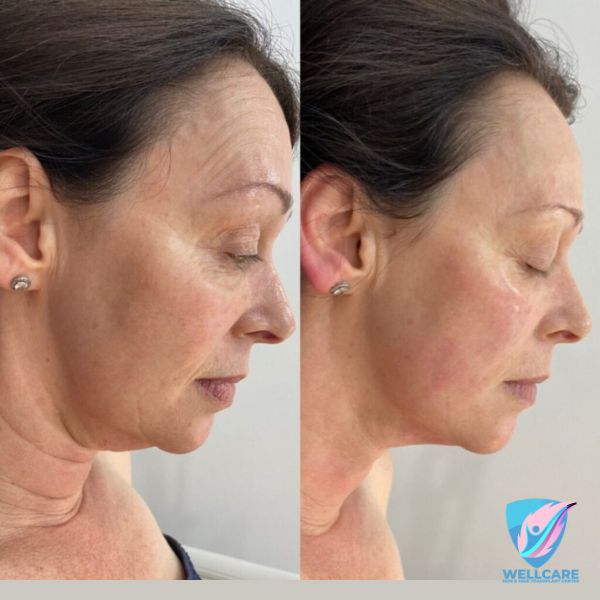
Neck | HIFU
Full Face & Neck | HIFU
What is HIFU treatment and how does it work?
HIFU, or High-Intensity Focused Ultrasound, is a non-invasive medical procedure that uses focused ultrasound waves to heat and destroy targeted tissue. HIFU works by delivering a high-frequency ultrasound beam to a specific area of the body, which causes the tissue to heat up and become damaged. The damaged tissue is then naturally eliminated by the body’s immune system. HIFU can be used to treat a variety of medical conditions, including cancerous and non-cancerous tumors, uterine fibroids, and prostate cancer.
The benefits of HIFU treatment for various medical conditions
One of the main benefits of HIFU treatment is that it is a non-invasive procedure, meaning that it does not require any incisions or invasive surgery. This can lead to faster recovery times and fewer complications. Additionally, HIFU can be used to treat a variety of medical conditions, including prostate cancer, breast cancer, and uterine fibroids. HIFU is also a relatively pain-free procedure, with most patients experiencing only mild discomfort during the treatment.
The difference between HIFU and other non-invasive treatments
HIFU is just one of several non-invasive medical treatments available today. Other non-invasive treatments include cryotherapy, laser therapy, and radiofrequency ablation. While these treatments are all designed to be minimally invasive, they work in different ways and are used to treat different medical conditions. For example, cryotherapy uses extreme cold to destroy tissue, while laser therapy uses high-energy light to heat and destroy tissue. HIFU, on the other hand, uses high-frequency ultrasound waves to heat and destroy tissue.
What to expect during a HIFU treatment session
During a HIFU treatment session, the patient will lie down on a treatment table while the ultrasound waves are directed at the targeted area of the body. The procedure typically takes between one and four hours, depending on the size and location of the targeted tissue. Patients may experience mild discomfort during the procedure, but it is generally well-tolerated. After the procedure, patients may experience some swelling and soreness, but these symptoms typically subside within a few days.
Potential side effects and risks of HIFU treatment
While HIFU is generally considered a safe procedure, there are some potential risks and side effects that patients should be aware of. These can include mild to moderate pain or discomfort during the procedure, swelling and soreness in the treated area, and in rare cases, burns or nerve damage. Patients should also be aware that HIFU may not be effective in all cases, and that additional treatments may be necessary.
Who is a good candidate for HIFU treatment?
HIFU treatment may be a good option for patients with certain medical conditions, including prostate cancer, breast cancer, and uterine fibroids. However, not all patients will be candidates for HIFU. Patients with pacemakers or other implanted medical devices may not be able to undergo HIFU, and patients with certain types of tumors may not be good candidates for the procedure.
Benefits
- Smoothing the Skin
- Skin Tightening
- Enhancing Jawline
- Anti-Ageing
- Reduces Wrinkles
- Very Natural-Looking
- Long Lasting Results
- Safe & Effective
- Non-Surgical
- Defines Cheeks Bones